At the height of the
Bakelite Costume Jewelry craze in the 1930' USA, some inventive designer copied
Fala, President Franklin D. Roosevelt's
Scottish Terrier, as a pin for everywoman.
It became so popular that it was imitated in all materials, including
rhinestones.
Didn't take long, and Europeans adopted the fashion in
molded plastics, like
Cellulose Acetate and
Galalith (Erinoid, material derived from milk proteins). Great Britain preferred these, colored and painted, but in spite of the controversial political situation it gained immense popularity in Germany, where it too was produced in
stamped metal, wood, sawdust bound with glue, glass....
The fashion lasted until the 1970'
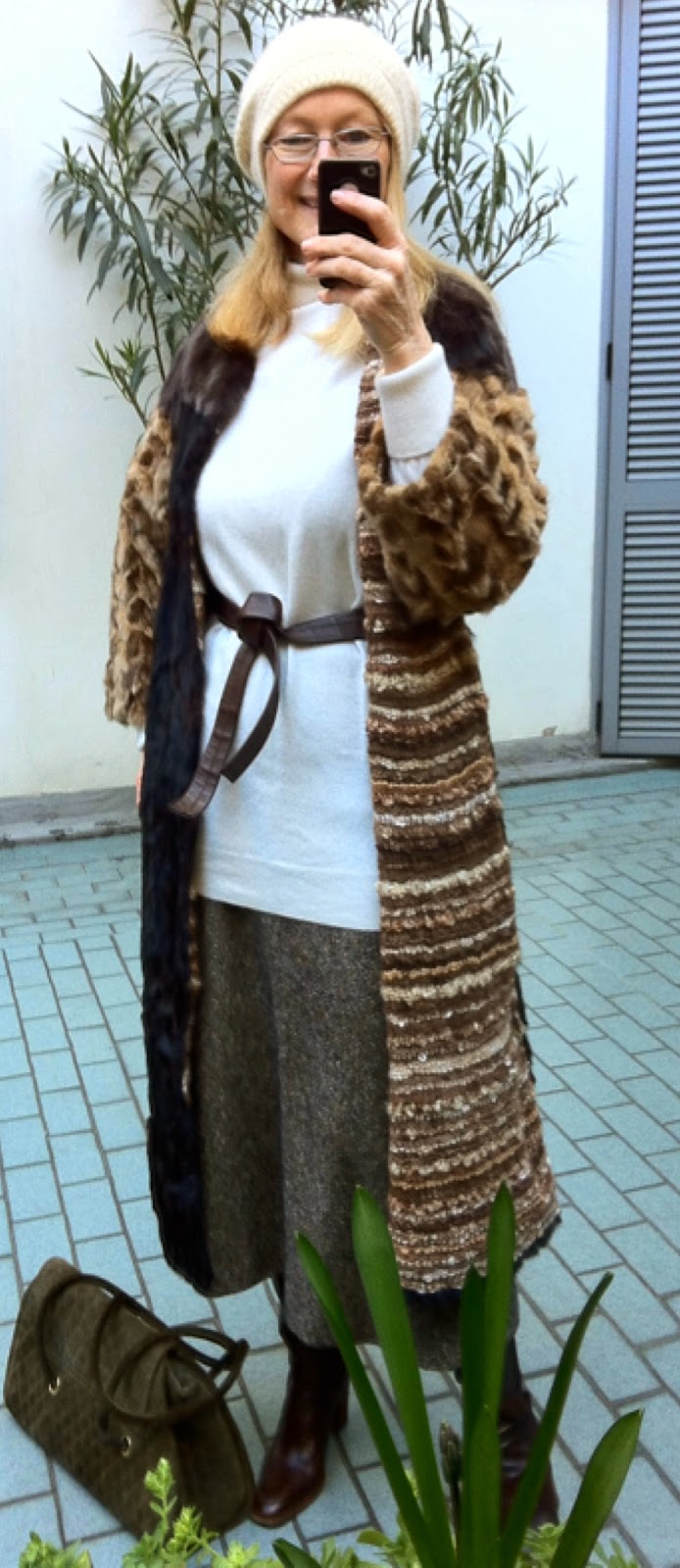
The title picture shows plastic pins on a 1990' ICEBERG sweater
left yellow galalith with rhinestones, right green Bakelite, both 1930/40
links gelbes Galalith mit Strass, rechts grünes Bakelit, beide 1930/40
a sinistra galalite giallo con strass, a destra Bakelite verde, 1930/40
Auf dem Höhepunkt des
Bakelit-Booms der 30er Jahre in den USA ist ein findiger Designer auf die Idee gekommen, den Hund des damaligen Präsidenten Franklin D. Roosevelt,
Fala, ein
Scottish Terrier, als Brosche zu kopieren.
Bald war das Subjekt so populär, dass es auch als
Strass - Version auf den Markt kam.
Ziemlich rasch erfreute es sich auch in Europa grosser Beliebtheit und wurde in den verschiedensten Materialen hergestellt:
Zellulose-Azetat, Galalith (ein Material aus den Proteinen der Milch),
gestanztem Metall, Holz, Sägemehl mit Klebstoff vermischt und gepresst, Glas......
Trotz der politischen Gegensätze wurde diese Art von Schmuck besonders in Deutschland beliebt (wahrscheinlich wusste damals niemand über den Ursprung Bescheid) und bis in die 70er Jahre häufig produziert.
Grossbritannien zog von Anfang an die gefärbten und bemalten Kunststoff-Versionen vor. Im restlichen Europa wurden diese erst nach dem WW2 produziert.
Das Titelfoto zeigt Plastik-Broschen auf einem ICEBERG Pullover (1990')
left painted galalith on gilded metal, right colored cellulose acetate, 1950'
links bemalter Galalith auf Metallplatte, rechts gefärbtes Zelluloseazetat, 50er Jahre
a sinistra galalite dipinta su metallo, a destra diacetato di cellulosa colorata, anni '50
Al culmine della popolarità della
Bachelite (anni '30) negli USA qualche designer furbo ha copiato il cane dell' allora presidente Franklin D. Roosevelt, uno
Scottish Terrier di nome
Fala, come spilla.
Molto presto era cosi popolare che veniva fatto anche in
Strass.
Piaceva anche in Europa, dove veniva prodotto in diversi materiali:
Diacetato di cellulosa, Galalite (plastica derivato dalle proteine del latte),
metallo stampato, legno, segatura incollata, vetro....
Nonostante le discrepanze politiche era la Germania che più adottava il soggetto (suppongo che nessuno sapeva delle origini) ed era popolare fino agli anni '70.
In Inghilterra sin da subito si preferivano le versioni in plastica colorata e dipinta, che arrivavano nel resto dell'Europa dopo la Seconda Guerra.
Sulla foto del titolo spille si plastica su maglione ICEBERG anni '90
all 3 cellulose acetate, 1950'
alle drei Zelluloseazetat, 50er
tutti e tre diacetato di cellulosa, anni '50
German and Austrian WW2 wartime and immediate post-war period pins, glass,plastic,metal
Deutsche und Österreichische Broschetten aus der Zeit des 2. WK oder kurz danach
Spillette tedesche e austriache del tempo della seconda guerra o poco dopo
Galalith buttons/Knöpfe aus Galalith/bottoni di galalite, 1950'
Galalith/galalite 1950'
left colored cellulose acetate, right stamped metal
links Zelluloseazetat, rechts gestanztes Metall
a sinistra diacetato di cellulosa, a destra metallo stampato
1950'
Annodized aluminium (or plastic covered in the material)
Eloxiertes Aluminium (oder mit Eloxal überzogenes Plastik)
Alluminio anodizzato (o plastica coperta di)
1950'
double pin in stamped metal
Doppel-Brosche in gestanztem Metall
spilla doppia in metallo stampato
1950'
scarf clip in oxidized brass
Schal-Clip in oxidiertem Messing
clip per foulard in ottone ossidato
1950'
cast metal promotional give-away
Werbegeschenk aus gegossenem Metall
omaggio promozionale, fusione di metallo
1950'
1960' rhinestone/strass
1960' DIY / Do-it-yourself

1970' rhinestone, the pair marked B&W made in England (Butler&Wilson), the dog in the middle R.Serbin
Strass, 1970', das Paar gestempelt B&W (Butler&Wilson), der Hund in der Mitte R.Serbin
Strass, anni '70, la coppia marcata B&W made in England (Butler&Wilson), il cane al centro R.Serbin
Lea Stein Paris, 1970'
Not every dog pictured was actually a Scottish Terrier, some seem hybrids of two or more races
Nicht jedes Schmuckstück zeigt auch effektiv einen Scottish Terrier, einige scheinen Hybriden zu sein
Non tutti i cani sono veri Scottish Terrier, alcuni sembrano dei ibridi
Scotties with Schnauzer faces or Schnauzer with Scottie bodies?
Scotties mit Schnauzer-Gesicht oder Schnauzer mit Scottie-Körper
Scottie con faccia di Schnauzer o Schnauzer con corpo di Scottie?
:))))
Rosa
Butler&Wilson,